
Simple Steps for a Healthier Back

Back pain is very common and can happen to anyone, whether you are at work, at home or simply getting on with your day.
In this months blog we will discuss:
- How to set up your desk to support your back
- Is there a “perfect” posture?
- Building a stronger body
- When to seek help for pain
Our bodies are designed to move.
NICE guidelines recommends staying active and continuing with normal activities as much as possible when managing back pain. Exercise and staying active can also help with recovery.
Your Desk Setup Matters
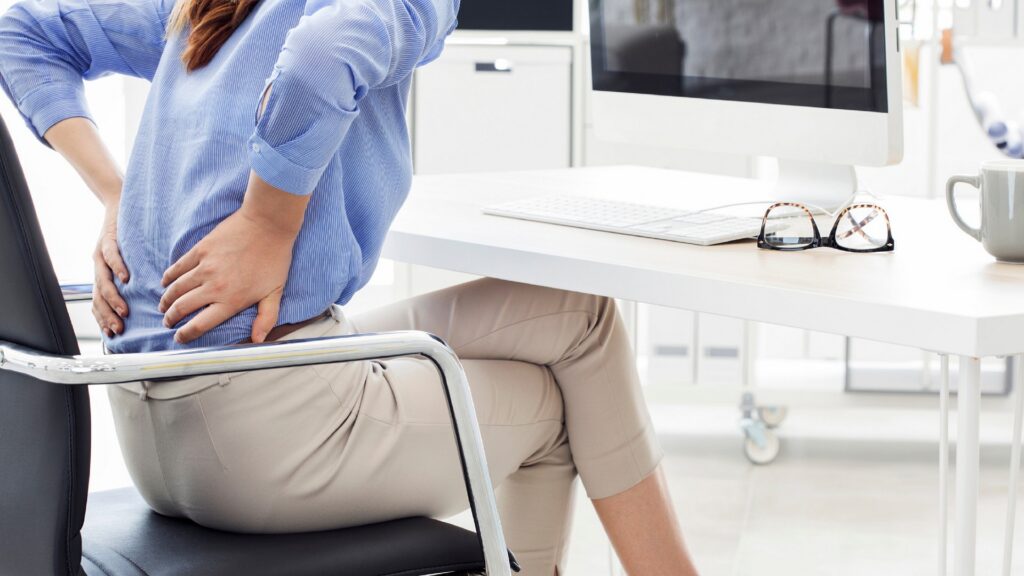
Many of us spend several hours a day at a desk. Staying in the same position for too long can leave your back, neck and shoulders feeling stiff or uncomfortable.
Your desk does not need to be perfect. A few simple changes can make your working day more comfortable.
Desk Setup Checklist
☐ Screen: Around eye level and directly in front of you
☐ Chair: Make sure you are comfortable and supported by the backrest
☐ Feet: Keep your feet comfortably supported on the floor or a footrest
☐ Knees: Around the same level as, or slightly lower than, your hips
☐ Keyboard and mouse: Keep them close so you do not have to reach
☐ Elbows: Keep them relaxed and close to your body
☐ Posture: Aim for comfortable and relaxed rather than sitting rigidly
☐ Movement: Get up and change position regularly
Is there a “perfect” posture?
There is not one “perfect” posture. Changing position and moving regularly are just as important.
If you spend a lot of time sitting at a desk, looking after your back does not mean you have to find the “perfect” sitting position.
Instead, try to make your workspace comfortable, change your position from time to time and, most importantly, keep moving throughout the day.
Simple things can help. Get up regularly, take a short walk, stretch your legs or simply change how you are sitting.
NICE workplace guidance recommends considering ergonomics, posture and opportunities to be physically active during the working day.
Build a Stronger, More Capable Body
Looking after your back is not just about posture.
The muscles around your back, tummy, hips and legs all work together to help you move, balance and get through everyday activities.
Keeping these muscles strong and your body moving can help you feel more confident when you are active.
You do not need to spend hours in the gym.
Walking, strength exercises, cycling, swimming, stretching or taking part in activities you enjoy can all help you stay active.
The most important thing is finding something that works for you and that you can keep doing.
A simple goal
Move more. Sit less. Get stronger.
You do not need a complicated exercise routine. Find ways to keep your body moving.

When Should You Get Some Help?
Most back pain gets better with time, staying active and the right advice.
However, it is a good idea to speak to a healthcare professional if your pain is not improving, is getting worse, or is making everyday activities difficult.
You should seek urgent medical advice if you develop:
• Significant weakness in your legs
• Increasing or widespread numbness
• New problems controlling your bladder or bowels
If you are worried about your back or simply are not sure what to do, you do not have to figure it out on your own. A physiotherapist or osteopath an assess what is going on, help you understand your symptoms and guide you with exercises and practical advice to help you get back to the things you enjoy.
Final thought
Keep moving. Keep active. Look after your body and do not be afraid of movement.
Our bodies are designed to move.
Refrences
NICE. Workplace health: management practices (NG13).
NICE. Low back pain and sciatica in over 16s: assessment and management (NG59).
Written by Kelvin Salosagcol, HCPC-registered physiotherapist 🗓️ October 9, 2026
